Introduction:
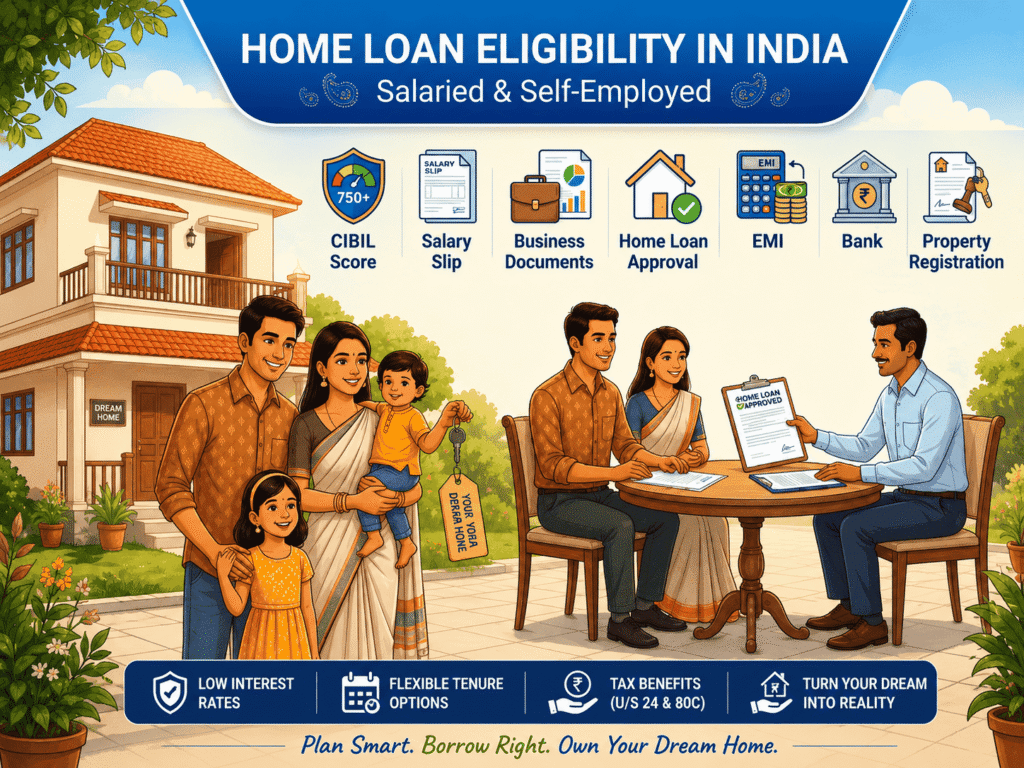
Buying your dream home is one of the biggest financial decisions you’ll ever make. However, many people begin searching for properties before knowing whether they fit for home loan eligibility or not.
As a result, they often face loan rejection, delayed approvals, or receive a lower loan amount than expected. This can be frustrating, especially after paying booking advances or planning family finances.
At Alfinz, we regularly meet customers who assume that a good salary alone guarantees a home loan. In reality, banks and housing finance companies evaluate several financial and legal factors before approving any application.
Therefore, understanding the home loan eligibility criteria before applying can save time, improve your approval chances, and even help you negotiate a better interest rate.
Whether you are a salaried employee or a self-employed professional, this guide explains the eligibility process in simple Indian English.
Home loan eligibility refers to the financial capacity of a borrower to repay a housing loan comfortably over the selected loan tenure.
Banks don’t approve loans simply because someone has a stable income. Instead, they assess your income, existing debts, employment or business stability, credit history, age, property details, and repayment ability.
In simple words, the lender wants confidence that your monthly EMI can be paid without creating financial stress.
Therefore, every applicant must satisfy certain home loan eligibility criteria before a loan is sanctioned.
Why Do Banks Check Eligibility?
Home loans usually continue for 15 to 30 years.
During this long period, banks take significant financial risk. Hence, they carefully evaluate every applicant before approving the loan.
Their goal is simple.
They want to ensure that borrowers can repay EMIs regularly without defaulting.
This evaluation protects both the borrower and the lender from future financial difficulties.
Importance of Checking Eligibility Before Applying
Many people apply to multiple banks without understanding the requirements.
Unfortunately, every rejected application can affect future borrowing opportunities.
Checking your eligibility beforehand offers several benefits.
- Saves processing time.
- Reduces chances of rejection.
- Helps estimate the loan amount.
- Improves financial planning.
- Gives confidence while selecting a property.
- Helps compare lenders more effectively.
Most importantly, it prevents unnecessary disappointment later.
Real-Life Indian Scenario
Recently, a young software engineer approached us after receiving a home loan rejection from two banks.
He was earning a decent monthly salary.
Naturally, he believed approval would be easy.
However, after reviewing his financial profile, we found two personal loans and high credit card utilisation.
Although his income was good, his existing monthly obligations reduced his repayment capacity.
Instead of applying again immediately, we advised him to close one personal loan and reduce his credit card outstanding balance.
Three months later, his eligibility improved significantly.
Eventually, he received approval with a better loan amount and a competitive interest rate.
This situation happens more frequently than is widely believed.
Understanding eligibility first can prevent unnecessary rejections.
Home Loan Eligibility for Salaried Individuals
Most housing loans in India are sanctioned to salaried employees because regular monthly income provides repayment confidence to lenders.
However, not every salaried applicant automatically qualifies.
Banks carefully evaluate employment stability, income consistency, employer profile, work experience, and financial discipline. Let’s understand each factor.
Minimum Net Monthly Income Benchmarks
One of the first things banks examine is your monthly take-home income.
Although there is no single RBI rule regarding minimum salary, every lender has its own internal eligibility requirements.
Generally, applicants with higher disposable income qualify for larger loan amounts.
For metro cities, lenders may expect a higher monthly income because living expenses are greater.
Similarly, applicants from smaller cities may qualify with comparatively lower income levels.
Banks also calculate whether your income comfortably supports the proposed EMI.
Therefore, increasing your monthly income naturally improves your borrowing capacity.
Stable Employment Matters
Income alone is not sufficient.
Banks also verify employment continuity.
Applicants working continuously for several years usually receive better consideration than those who frequently change jobs.
Most lenders prefer borrowers who have completed probation and have stable employment records.
A consistent career indicates reliable future income.
Consequently, lenders consider such applicants lower-risk borrowers.
Company Categorization (MNC vs Private Limited Company)
Many borrowers don’t know that the employer’s reputation can influence home loan approval.
Banks internally classify employers into different categories.
Employees working in reputed MNCs, listed companies, government organisations, or well-established institutions often receive favourable treatment.
Why?
Because these companies usually provide stable salaries and lower employment risk.
On the other hand, employees working in newly established firms or smaller businesses may undergo additional verification.
This doesn’t mean rejection.
It simply means lenders assess employment stability more carefully.
Salary Structure Also Matters
Banks examine your salary breakup instead of looking only at the total CTC.
Fixed monthly income carries greater importance than variable incentives.
Bonuses, performance rewards, and commissions may not always be considered fully while calculating eligibility.
Therefore, applicants with a higher fixed salary generally qualify for better loan amounts.
Why Form 16 is Mandatory for Salaried Borrowers
Many first-time borrowers ask why banks insist on Form 16.
The answer is straightforward.
Form 16 confirms that your employer has deducted applicable income tax and reported your salary officially.
It acts as proof of genuine employment and declared income.
Banks compare Form 16 with salary slips and bank statements to verify consistency.
Any mismatch may require further clarification.
Keeping your income records transparent improves lender confidence.
Salary Credits Through Bank Account
Banks also verify whether salaries are regularly credited into your account.
Consistent salary credits demonstrate stable income.
Regular banking transactions make income verification faster.
Therefore, maintaining proper salary banking improves the application process.
Also Read : Which is Better to Buy a Home: Cash vs Home Loan? Benefits, Risks & Best Decision Guide for Beginners
Why Existing Loans Reduce Home Loan Eligibility
Many applicants wonder why banks offer lower loan amounts despite a decent salary.
The answer lies in repayment capacity.
Every active loan reduces your available monthly income.
Consequently, banks assume you have less room for another EMI.
This directly impacts the maximum sanctioned amount.
Therefore, closing small personal loans before applying often increases eligibility.
During our consultations, we often notice applicants changing jobs just before applying for a home loan.
Although career growth is important, switching employers immediately before loan processing may delay approval.
If possible, complete your probation period first.
Then apply for the housing loan.
A stable employment record strengthens your profile considerably.
Home Loan Eligibility for Self-Employed Individuals
Self-employed borrowers include business owners, shopkeepers, doctors, architects, chartered accountants, freelancers, consultants, and other professionals.
Unlike salaried employees, their monthly income may fluctuate.
Therefore, banks perform deeper financial analysis before approving loans. Nevertheless, many successful business owners easily qualify by maintaining proper financial records.
Business Vintage and Continuity Requirements
One of the first eligibility factors is business continuity.
Most lenders prefer businesses operating successfully for at least two to three years.
A longer operating history indicates financial stability.
New businesses may still qualify.
However, they often undergo stricter evaluation because future income remains uncertain.
Maintaining uninterrupted business operations creates confidence among lenders.
Regular Business Income
Banks assess whether your business generates stable income consistently.
Seasonal fluctuations are acceptable in some industries.
However, regular profitability remains important.
Large variations in income may reduce loan eligibility.
Proper financial planning helps demonstrate business stability.
The Importance of Audited Profit & Loss (P&L) Statements
Audited financial statements play a major role during loan assessment.
Banks review your Profit and Loss Account to understand business performance.
Healthy revenue growth and sustainable profits improve eligibility.
Similarly, audited Balance Sheets help lenders evaluate assets, liabilities, and business strength.
Well-maintained books of accounts always create a positive impression.
Why Income Tax Returns Matter
Many business owners underestimate the importance of filing Income Tax Returns regularly.
However, lenders rely heavily on ITRs while calculating repayment capacity.
Generally, banks review the last two or three years’ returns.
Consistent income declaration builds credibility.
Undeclared cash income usually cannot be considered for loan eligibility.
Therefore, honest tax filing often results in higher sanctioned loan amounts.
Banking Transactions Reflect Business Health
Apart from financial statements, lenders also analyse business bank accounts.
Regular customer receipts, supplier payments, GST-related transactions, and healthy cash flow indicate business continuity.
Transparent banking records simplify income assessment.
Consequently, approval decisions become faster.
Real time Experience from Alfinz
We recently assisted a small manufacturing business owner who initially believed his high turnover guaranteed a large home loan.
After reviewing his records, we noticed that his declared taxable income was significantly lower than his actual business receipts.
Although the business generated good revenue, limited declared profits reduced his eligibility.
We advised him on maintaining proper financial records and consistent tax compliance.
After subsequent filings reflected the true business performance, his borrowing capacity improved considerably.
This demonstrates an important lesson.
Business turnover alone doesn’t determine eligibility. Proper documentation and genuine income declaration make a significant difference.

Financial Ratios Used by Indian Banks
When people apply for a housing loan, they usually focus on salary or business income. However, banks dive deeper before approving the application.
They calculate different financial ratios to understand whether the borrower can comfortably repay the EMI for many years.
This process helps banks reduce lending risk and protects borrowers from taking excessive debt.
Let’s understand the most important calculations used by lenders.
How Bank Calculates Home Loan Eligibility
Banks use multiple financial parameters instead of relying on one factor.
They evaluate:
- Monthly income
- Existing loan EMIs
- Credit history
- Employment stability
- Business continuity
- Age
- Loan tenure
- Property value
- Savings pattern
After analysing these factors together, the lender decides the maximum loan amount you qualify for.
This is why two people earning the same salary may receive different loan eligibility.
Understanding Fixed Obligation to Income Ratio (FOIR)
One of the most important calculations is the Fixed Obligation to Income Ratio (FOIR).
FOIR shows how much of your monthly income goes toward existing bills and loans.
These obligations include:
- Personal loan EMIs
- Car loan EMIs
- Education loans
- Credit card minimum payments
- Existing home loan EMIs
- Consumer durable loans
Banks generally prefer that your total monthly obligations, including the proposed home loan EMI, remain within their acceptable FOIR limits.
Although the percentage varies among lenders, a lower FOIR usually improves loan eligibility.
Simply put, the less debt you already have, the higher your chances of receiving a larger home loan.
Simple FOIR Example
Suppose your monthly net income is ₹1,00,000.
You’re existing EMIs are:
- Car Loan – Rs.12,000
- Personal Loan – Rs.8,000
Total existing obligations become ₹20,000.
If the bank allows additional EMI within its FOIR policy, your maximum eligible home loan EMI will depend on the remaining repayment capacity.
Therefore, reducing existing debt before applying can significantly improve eligibility.
How Credit Card Debt Shrinks Your Eligibility
Credit cards are convenient.
However, high outstanding balances send warning signals to lenders.
Banks don’t only consider the minimum payment.
They also evaluate your overall credit utilisation.
A borrower consistently using most of the available credit limit appears financially stressed.
As a result, lenders may reduce the sanctioned amount or conduct additional verification.
Keeping utilisation below 30% generally creates a healthier credit profile.
Multiple Personal Loans Can Become a Problem
Many borrowers have several small loans.
Individually, these EMIs may look manageable.
Collectively, however, they increase your financial burden.
Banks combine every monthly obligation while calculating eligibility.
Therefore, consolidating or repaying unnecessary loans before applying often improves approval chances.
Real Experience from Alfinz
A customer earning Rs.85,000 per month approached us expecting a home loan of nearly Rs.50 lakh.
After reviewing his profile, we noticed three active personal loans, one vehicle loan, and two credit cards with high outstanding balances.
His income was good.
Unfortunately, his repayment commitments were equally high.
Instead of applying immediately, we advised him to close one personal loan and reduce his credit card utilisation.
Within a few months, his eligibility improved substantially.
Eventually, he received a much higher loan sanction. Small financial improvements can create significant results.
Credit Score Requirements for Home Loans
Your income may be excellent.
Your job may also be stable.
Still, your home loan application can face delays if your credit history is weak.
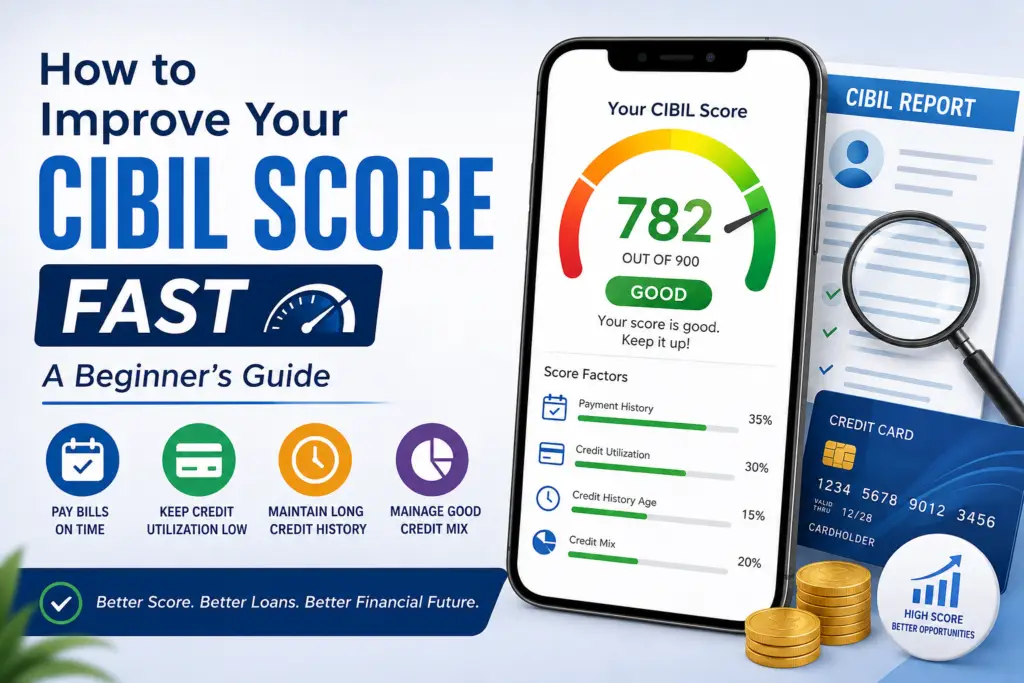
That is why your CIBIL score plays an extremely important role.
It reflects your repayment discipline over the years. Banks use this score to estimate lending risk.
Also Read: Why Is Your CIBIL Score Important? Best Ways to Improve It
Minimum CIBIL Score for Home Loan
Although different lenders have different policies, most banks prefer applicants with a healthy credit score.
Generally,
- 750 and above – Excellent approval chances.
- 700–749 – Good eligibility with competitive options.
- 650–699 – Approval possible after additional evaluation.
- Below 650 – Higher chances of rejection or stricter conditions.
Remember, the score alone does not guarantee approval.
Banks also consider income, documents, employment stability, and repayment capacity.
Why a 750+ CIBIL Score Saves You Thousands
Many people believe a higher score only improves approval chances.
Actually, it offers much more.
Borrowers with excellent credit profiles often receive:
- Better negotiating power.
- Lower interest rates.
- Faster processing.
- Higher loan eligibility.
- Reduced documentation in some cases.
Even a small reduction in interest rate can save several lakhs over a long loan tenure.
Therefore, maintaining a healthy credit score provides long-term financial benefits.
What Happens to Your Credit Score When You Miss an EMI?
Every delayed EMI creates a negative repayment history.
Banks report repayment behaviour to credit bureaus regularly.
Repeated delays indicate poor financial discipline.
Consequently, your score gradually decreases.
Even if your income increases later, the repayment history remains visible.
Paying every EMI before the due date is one of the simplest ways to protect your score.
How Hard Credit Inquiries Lower Your Score
Many borrowers apply to several banks within a short period hoping someone will approve the loan.
Unfortunately, every lender may perform a hard inquiry.
Too many hard inquiries within a limited period suggest credit desperation.
This can reduce your credit score slightly.
Instead, assess your eligibility first.
Then apply selectively through suitable lenders. This approach protects your credit profile.
Credit Card Utilisation Matters Too
Suppose your credit card limit is ₹2 lakh.
If you consistently use ₹1.8 lakh every month, banks may assume financial pressure.
High utilisation affects your credit profile even when payments are made on time.
Maintaining lower utilisation demonstrates responsible borrowing behaviour.
Pro Tip from Alfinz:
We always encourage customers to check their credit report before applying for any housing loan.
Sometimes old credit card balances, incorrect reporting, or forgotten consumer loans continue affecting the score.
Identifying these issues early prevents unnecessary loan rejection.
A little preparation today can improve approval tomorrow.
Property Factors That Affect Loan Approval
Many applicants think that loan approval depends only on income.
Actually, the property itself plays an equally important role.
Even financially strong applicants may face rejection if the property has legal or regulatory issues.
Therefore, banks verify the property’s documentation very carefully.
RBI Guidelines for Home Loan LTV
One of the important lending concepts is the Loan-to-Value Ratio (LTV).
LTV represents the percentage of property value that the lender is willing to finance.
The remaining amount must be contributed by the buyer as the down payment.
For example,
If the property value is Rs.60 lakh and the lender approves 80% financing, the bank may finance Rs.48 lakh.
The buyer contributes the remaining amount.
This requirement ensures borrowers also invest their own funds while purchasing the property.
Why LTV Matters
A higher property value does not automatically mean a higher loan.
Banks always calculate financing within their approved LTV policy.
Therefore, buyers should plan the down payment before finalising the property.
Understanding LTV early helps avoid financial surprises during registration.
RERA Registration
- Prefer RERA-registered projects, especially for under-construction properties.
- Ensures greater transparency and legal compliance.
- Increases buyer confidence and improves loan approval chances.
- Always verify the project’s RERA registration before paying any advance
Local Municipal Approvals
Banks verify whether the property has all the required legal approvals, including:
- Approved building plan
- Municipal permissions
- Clear land ownership documents
- Occupancy/Completion Certificate (where applicable)
- Property tax records
Missing or incomplete approvals can delay or even lead to loan rejection
Property Age and Condition
Older properties are eligible for home loans, but banks evaluate:
- Remaining useful life of the property
- Structural condition
- Current market value
- Future resale potential
Well-maintained properties with clear legal documents generally receive quicker approvals and better financing options.
Sign Up for Free Demat account and Invest with Zero Brokerage on Equity & Mutual funds Investments
Real Experience from Alfinz
A customer selected a beautiful apartment at an attractive price.
Financially, he qualified comfortably.
However, during document verification, the project lacked certain approvals required by the lender.
Instead of risking future legal complications, we advised him to consider another approved project.
Although the purchase was delayed slightly, the new property received quick loan approval without unnecessary stress.
Choosing the right property is just as important as having the right income.
How to Increase Home Loan Eligibility
Many people believe loan eligibility cannot be improved.
Fortunately, that is not true.
Several practical steps can significantly increase your borrowing capacity before submitting the application.
Planning even three to six months in advance often produces better results.
Add a Co-Applicant
One of the easiest ways to improve eligibility is adding a co-applicant.
This could be:
- Your spouse.
- An earning parent.
- An earning son or daughter.
- Another eligible family member accepted by the lender.
Combined income increases repayment capacity.
Consequently, banks may sanction a larger loan amount.
Choose a Longer Loan Tenure
Monthly EMI depends on loan tenure.
A longer repayment period reduces the monthly EMI.
Therefore, your repayment capacity improves.
Many lenders today offer home loan tenures extending up to 30 years, depending on age and eligibility.
Although longer tenure increases overall interest paid, it can improve approval chances for eligible borrowers.
Close Existing Loans Before Applying
This is one of the best ways to improve eligibility.
Closing:
- Personal loans
- Consumer loans
- Small vehicle loans
reduces your monthly obligations.
As a result, your FOIR improves significantly.
Banks then view your repayment capacity more positively.
Improve Your Credit Score
A few months of disciplined financial behaviour can make a noticeable difference.
Simple habits include:
- Paying every EMI on time.
- Reducing credit card balances.
- Avoiding unnecessary loan applications.
- Correcting errors in your credit report.
- Maintaining consistent banking transactions.
These steps gradually strengthen your credit profile.
Declare Genuine Income
Some applicant’s under-report income to reduce taxes.
Later, they expect a larger housing loan.
Banks rely primarily on officially declared income.
Therefore, transparent financial records usually result in higher eligibility.
This advice is particularly important for self-employed borrowers.
Maintain Stable Employment or Business
Avoid changing jobs immediately before applying unless necessary.
Similarly, business owners should maintain stable operations and proper accounting records.
Consistency always improves lender confidence.
Expert Guidance Makes the Process Easier
Every lender follows slightly different eligibility policies.
A profile rejected by one bank may qualify with another lender.
Professional guidance helps identify the most suitable financing option based on your income, occupation, property type, and repayment capacity.
At Alfinz, we analyse the complete financial profile before recommending suitable lenders.
This approach saves valuable time and improves approval chances.
Essential Document Checklist for Home Loan in India
Applying for a home loan becomes much easier when all your documents are ready before approaching the lender.
Complete your paperwork fully to prevent unnecessary processing delays. Preparing the required documents in advance helps banks verify your profile quickly.
Although document requirements may vary slightly between lenders, the following checklist covers the documents most Indian banks and housing finance companies ask for.
Documents Required for Home Loan
Before submitting your application, keep both original documents and self-attested photocopies ready.
Where available, maintain scanned copies as well. This makes online applications faster and more convenient.
Let’s understand the document requirements category-wise.
KYC Checklist (PAN, Aadhaar and Address Proof)
Identity verification is mandatory for every borrower.
Banks use KYC documents to verify your identity, address, and legal status before approving the loan.
Generally, the following documents are required.
Identity Proof
Please ensure you have one or more of these documents available:
- PAN Card
- Aadhaar Card
- Passport
- Voter ID
- Driving License
Ensure that the name on all documents matches your loan application.
Any mismatch may delay verification.
Address Proof
Banks also verify your current residential address.
Accepted documents usually include:
- Aadhaar Card
- Passport
- Driving License
- Utility Bills
- Registered Rent Agreement
- Property Tax Receipt
If you recently shifted residence, update your address before applying.
This helps avoid unnecessary document queries.
- PAN Card
PAN is one of the most important documents for home loan processing.
It helps banks verify your income tax records and financial transactions.
Most lenders require PAN for income assessment and credit verification.
- Aadhaar Card
Aadhaar simplifies identity verification.
Many lenders offer Aadhaar-based e-KYC to give you faster loan approval. Keeping your mobile number linked with Aadhaar makes verification easier.
- Passport Size Photographs
Applicants should keep recent passport-size photographs ready.
Some lenders require physical photographs, while digital applications may accept uploaded images.
Financial Checklist for “Salaried Individuals“
Salaried borrowers must provide documents proving employment stability and regular income.
The following documents are generally required.
Salary Slips
Most lenders ask for salary slips of the last three to six months.
Salary slips help banks verify:
- Monthly salary
- Employer details
- Deductions
- Fixed income
- Employment continuity
Always provide clear and complete copies.
Bank Statements
Banks generally request salary account statements for the previous six months.
These statements help verify:
- Salary credits
- Monthly transactions
- Existing EMIs
- Financial discipline
Regular salary credits improve lender confidence.
Form 16
Form 16 acts as proof of income tax deducted by your employer.
It confirms officially declared income.
Banks compare Form 16 with salary slips and bank statements before calculating eligibility.
Therefore, keep the latest Form 16 ready before applying.
Income Tax Returns (If Applicable)
Some lenders may request Income Tax Returns, especially for applicants receiving additional rental income or freelance income.
Providing complete tax records improves transparency.
Employment Proof
Banks may also request:
- Employee Identity Card
- Appointment Letter
- Employment Confirmation Letter
These documents confirm stable employment.
Financial Checklist for “Self-Employed Individuals“
Self-employed borrowers undergo more detailed financial verification.
Proper documentation significantly improves approval chances.
Income Tax Returns
Banks usually request Income Tax Returns for the previous two or three financial years.
Regular filing demonstrates financial discipline.
Higher declared income generally improves borrowing capacity.
Avoid skipping annual tax filing if you plan to purchase property.
Audited Profit and Loss Statement
The audited Profit and Loss Account show business performance.
Lenders analyse:
- Revenue
- Net Profit
- Business growth
- Profit consistency
Healthy profitability strengthens your application.
Balance Sheet
Banks review audited balance sheets to understand business assets and liabilities.
A financially stable business creates confidence among lenders.
Maintain professionally prepared financial statements.
GST Returns
Where applicable, GST returns help establish business turnover and transaction history.
Regular GST compliance supports business credibility.
Business Proof
Applicants may also require documents such as:
- GST Registration Certificate
- Shop and Establishment Certificate
- Trade Licence
- Partnership Deed
- Company Incorporation Certificate
- Professional Practice Certificate
Your business type determines the exact requirements
Business Bank Statements
Banks generally request business account statements for the previous six to twelve months.
They review:
- Customer receipts
- Vendor payments
- Cash flow
- Average balance
- Business continuity
Transparent banking records improve lender confidence.
Property Documents Required
Apart from borrower documents, property-related documents are equally important.
Depending on the property type, lenders may ask for:
- Sale Agreement
- Sale Deed
- Title Documents
- Approved Building Plan
- Encumbrance Certificate
- Property Tax Receipts
- Occupancy Certificate
- Completion Certificate
- RERA Registration Details
- Builder Demand Letter (for under-construction projects)
Proper legal documentation helps avoid delays during property verification.
Keep Digital Copies Ready
Today, many lenders accept online applications.
Therefore, keeping scanned PDF copies of all documents saves valuable time.
Organise them in separate folders such as:
- Identity Documents
- Income Documents
- Property Documents
- Tax Documents
- Bank Statements
A well-organised application creates a positive impression.
Proper Documentation Experience from Alfinz
One customer visited us after his loan processing remained pending for almost three weeks.
The bank repeatedly requested missing documents.
After reviewing his file, we realised that his bank statements, Form 16, and address proof belonged to different addresses.
We helped him organize the required documents properly before resubmission.
The lender completed verification within a few working days.
This experience highlights an important lesson.
Well-prepared documentation often speeds up loan approval more than people expect.
FAQs
Different lenders have different income requirements.
Generally, higher monthly income improves your loan eligibility. Banks also consider your existing financial obligations before deciding the sanctioned amount.
Yes. Business owners, professionals, consultants, freelancers, and entrepreneurs can apply.
However, lenders usually require Income Tax Returns, audited financial statements, and proof of stable business income.
A CIBIL score of 750 or above generally improves approval chances and may help borrowers negotiate better interest rates.
Yes. However, your existing EMI affects your repayment capacity.
Banks calculate your overall financial obligations before deciding the eligible loan amount.
Frequent job changes immediately before applying may delay approval.
Stable employment usually strengthens your application.
Yes. Adding an earning spouse as a co-applicant may increase your overall loan eligibility.
Most lenders ask for the previous two or three financial years’ Income Tax Returns.
In most cases, yes. Form 16 helps lenders verify officially declared salary income.
Yes. Many borrowers first obtain a home loan pre-approval.
This helps them understand their budget before searching for a property.
A pre-approved loan indicates the approximate amount a lender may sanction based on your financial profile, subject to property verification and final documentation.
The processing time depends on the lender, document completeness, legal verification, and property approvals.
Proper documentation usually speeds up the process.
Yes. Timely EMI payments, lower credit card utilisation, and correcting errors in your credit report can gradually improve your credit score.
Need a Home Loan Urgently? Talk to Alfinz Today
Buying your dream home shouldn’t be delayed because of paperwork or confusion.
Whether you’re a salaried employee, business owner, freelancer, or first-time homebuyer, our experts help you understand your eligibility before you apply.
Instead of applying to multiple banks and risking rejection, let Alfinz guide you towards the most suitable lender based on your financial profile.
We Help You With:
✔ Free Home Loan Eligibility Assessment
✔ Home Loan Pre-Approval Guidance
✔ Documentation Support
✔ Multiple Bank Loan Comparison
✔ CIBIL Score Guidance
✔ Property Loan Consultation
✔ Faster Loan Processing Assistance
Don’t Wait Until Your Dream Property Is Sold!
Speak with an Alfinz Home Loan Expert today and get your eligibility checked before you pay any booking amount.
A few minutes of expert consultation today could save you weeks of delays and even lakhs of rupees over your loan tenure.
Contact Alfinz Today for Personalized Investment Guidance Before You Start Investing
Need personalized financial guidance?
Contact Alfinz today for Investments, Insurance, Loans, Taxation & Financial Planning assistance.
Disclaimer: This article is published for general educational and informational purposes only. The content shared is based on common financial planning principles and personal finance awareness. It should not be considered professional financial, investment, tax, legal, or insurance advice. Financial decisions should always be made based on individual goals, risk profile, income, and personal circumstances. Readers are advised to consult a qualified financial advisor or professional before making any financial or investment decisions. Alfinz shall not be responsible for any financial loss or decisions taken based on this content.

Shiva Kumar is the Founder of ALFINZ, a financial planning and investment advisory platform dedicated to helping individuals make informed financial decisions. He holds NISM certifications in Equity Derivatives, Currency Derivatives, Equity Research Analysis, and Mutual Fund RTA. Through ALFINZ, he shares practical insights on financial planning, stock market investing, mutual funds, insurance, taxation, and wealth creation.