
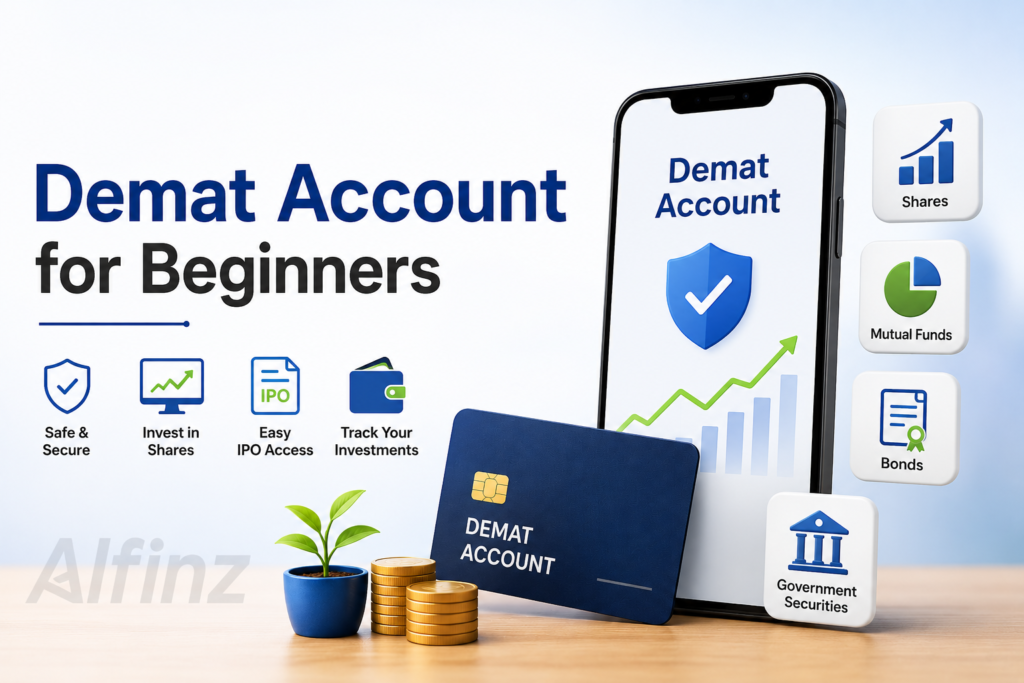
The Importance of a Demat Account in Modern Investing
If you want to invest in shares, mutual funds, ETFs, or IPOs in India, a Demat Account is the first step. Earlier, people used physical share certificates. However, today everything is digital, faster, and safer.
A Demat Account helps you store your investments electronically. Because of this, buying and selling shares becomes smooth and secure. Most importantly, it removes paperwork and reduces fraud risks.
For beginners, opening a Demat Account may look confusing at first. Yet, once you understand the process, it becomes very simple. In fact, many investors complete the account opening within a single day.
Today, many Indians are starting SIPs, investing in stocks, and creating long-term wealth. Therefore, understanding how a Demat Account works is becoming more important than ever.
Whether you are a salaried employee, student, business owner, or homemaker, learning about Demat Accounts can help you begin your investment journey confidently.
What is a Demat Account?
A Demat Account, also called a Dematerialized Account, is used to hold shares and securities in digital form. Instead of keeping paper certificates, your investments stay safely online.
The word “Demat” simply means converting physical shares into electronic format. Because of this system, investors can buy, hold, and sell shares without paperwork.
A Demat Account can store:
- Shares
- Mutual Funds
- Bonds
- ETFs
- Government Securities
- IPO allotments
For example, if you buy shares of a company, those shares are credited directly into your Demat Account. Similarly, when you sell them, the shares get debited automatically. Therefore, a Demat Account acts like a digital locker for investments.
Also Read: Demat Account Charges: The Hidden Wealth-Eaters Every Beginner should Know
What is a Trading Account?
A Trading Account is used to buy and sell shares in the stock market. While the Demat Account stores shares, the Trading Account helps you perform transactions.
Think of it like this:
- Trading Account = Buying and Selling
- Demat Account = Storage
Without a Trading Account, you cannot place stock market orders. Similarly, without a Demat Account, you cannot hold shares digitally.
Hence, both accounts work together during stock investing.
How Demat and Trading Accounts Work Together
Suppose Ravi from Hyderabad wants to buy shares of a company.
First, he transfers money from his bank account into the Trading Account. Then, he places a buy order through his broker’s app. After the order is executed, the purchased shares move into his Demat Account automatically.
Later, if Ravi decides to sell those shares, the shares leave the Demat Account and the money reaches his Trading Account.
Finally, the amount can be transferred back to his bank account. This entire process happens digitally within seconds. Therefore, modern investing has become easier for beginners in India.
Importance of a Demat Account
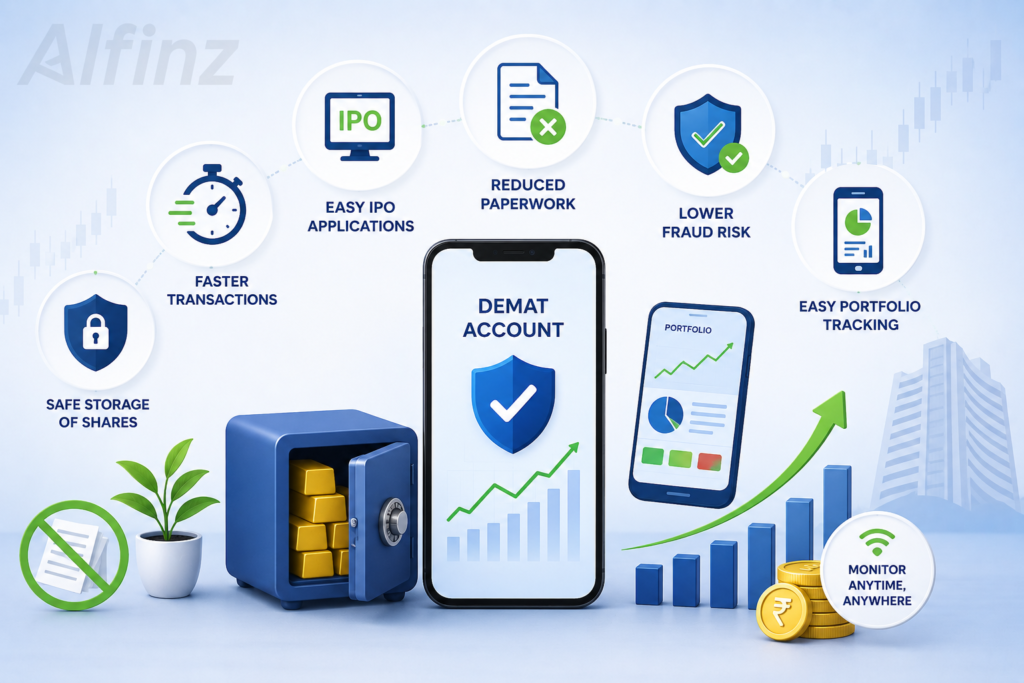
A Demat Account is important because it makes investing simple, secure, and paperless.
Key Benefits:
- Safe storage of shares
- Faster transactions
- Easy IPO applications
- Reduced paperwork
- Lower fraud risk
- Easy portfolio tracking
Moreover, investors can monitor all investments from mobile apps anytime.
Because of digital access, many young Indians now prefer online investing over traditional savings methods.
Real-Life Indian Scenario
A few years ago, many families depended only on savings accounts or gold investments. However, today even small-town investors are entering the stock market.
For example, a software employee in Bengaluru may start a ₹2,000 monthly SIP and slowly begin stock investing using a Demat Account.
Similarly, a college student in Telangana may apply for IPOs through a mobile app using the same account.
This shows how Demat Accounts are helping ordinary Indians build financial awareness and wealth.
Also Read: Which Stock Broker Is Better: Full-Service or Discount?
Step-by-Step Demat Account Opening Process
Step 1: Choose a Depository Participant (DP)
A Depository Participant, commonly called a DP, is a company or broker that offers Demat Account services.
Popular DPs in India include banks and stock brokers. However, choosing the right one is very important.
Before selecting a DP, compare:
- Brokerage charges
- Annual maintenance fees
- App usability
- Customer support
- Research tools
Beginners should always choose a trusted and SEBI-registered broker.
Moreover, selecting a user-friendly platform can improve your investing experience significantly.
Step 2: Gather Required Documents
To open a Demat Account, you need basic KYC documents.
Usually, the following documents are required:
- PAN Card
- Aadhaar Card
- Bank Account Details
- Mobile Number
- Email ID
- Passport-size Photograph
- Signature
Sometimes, income proof may also be needed for trading in derivatives. Therefore, keeping all documents ready can speed up the process.
Step 3: Fill Out the Online Application & Complete KYC
Nowadays, most brokers offer fully online account opening. You simply visit the broker’s website or app and enter your details.
The platform may ask for:
- Personal details
- Address details
- Bank details
- Income information
After this, KYC verification takes place through Aadhaar OTP or video verification. Because of digital KYC systems, the process has become much faster than before.
Step 4: E-Sign and Activate
After verification, you need to e-sign the application digitally. Usually, Aadhaar OTP authentication is used for this step.
Once submitted, the broker reviews the application. After approval, your Demat and Trading Accounts become active. In many cases, activation happens within a few hours.
Finally, you can start investing in shares, IPOs, and mutual funds directly from your smartphone.
Demat Account for Beginners: Investment Based Guidance
Today, opening a Demat Account has become very easy. However, many beginners start investing without fully understanding how the stock market works.
As a result, investors sometimes make decisions based on social media trends, random tips, or market emotions instead of proper planning.
Some common beginner mistakes include:
- Opening accounts without comparing charges
- Buying shares without research
- Investing only because others are investing
- Forgetting nominee updates
- Holding inactive or unnecessary accounts
Therefore, having the right financial guidance can make a big difference in your investment journey.
A consultation-based approach helps investors understand their financial goals, monthly income, risk capacity, and long-term expectations before investing money. At Alfinz, we focus on practical and goal-based financial planning. Instead of chasing market trends, we help investors build disciplined and confident investing habits for long-term wealth creation.
Helpful Demat Account Guides Every Beginner Should Read:
Starting a Demat Account is only the first step in investing. However, understanding related topics can help beginners make smarter financial decisions and avoid costly mistakes later.
These beginner-friendly guides will help investors learn about charges, safety features, banking options, and account management in a simple and practical way.
By reading these articles, investors can build stronger financial knowledge and improve their confidence before entering the stock market.
Demat Account Charges & Hidden Fees Every Beginner Must Know
Many beginners focus only on “zero brokerage” advertisements. However, several other charges may apply.
These include:
- AMC charges
- Transaction charges
- DP charges
- GST
- Call & trade charges
Understanding these costs can help investors avoid surprises later.
Nomination in Demat Accounts: Why You Shouldn’t Skip This Step
Nomination is extremely important for family financial security.
If something happens to the account holder, the nominee can claim the investments smoothly. Unfortunately, many investors ignore this step during account opening.
Therefore, every investor should add or update nominations immediately.
How to Link Multiple Bank Accounts to a Single Demat Account
Many investors use separate bank accounts for salary, business, and investments.
Fortunately, several brokers allow linking multiple bank accounts to one trading platform. This feature helps manage funds more efficiently while investing.
However, investors should always maintain proper banking records and authorized account details.
Demat Account –FAQ
Yes, income proof is generally not required for equity investing. However, derivatives trading may require income documents.
Some brokers offer free account opening. Yet, AMC and transaction charges may still apply.
Yes, students above 18 years can open their own account using PAN and Aadhaar.
Yes, PAN Card is compulsory as per SEBI regulations.
An individual can hold multiple Demat Accounts with different brokers.
Don’t Delay Your Investment Journey
Every year you postpone investing, you may lose valuable wealth-building opportunities.
Start your Demat Account today and take the first step toward financial freedom, smart investing, and long-term wealth creation.
Need Help Choosing the Right Demat Account?
Contact Alfinz today for beginner-friendly financial guidance, investment planning, SIP support, and Demat Account assistance.
Contact Alfinz Today for Personalized Investment Guidance Before You Start Investing
Need personalized financial guidance?
Contact Alfinz today for Investments, Insurance, Loans, Taxation & Financial Planning assistance.
Disclaimer: This article is published for general educational and informational purposes only. The content shared is based on common financial planning principles and personal finance awareness. It should not be considered professional financial, investment, tax, legal, or insurance advice. Financial decisions should always be made based on individual goals, risk profile, income, and personal circumstances. Readers are advised to consult a qualified financial advisor or professional before making any financial or investment decisions. Alfinz shall not be responsible for any financial loss or decisions taken based on this content.

Shiva Kumar is the Founder of ALFINZ, a financial planning and investment advisory platform dedicated to helping individuals make informed financial decisions. He holds NISM certifications in Equity Derivatives, Currency Derivatives, Equity Research Analysis, and Mutual Fund RTA. Through ALFINZ, he shares practical insights on financial planning, stock market investing, mutual funds, insurance, taxation, and wealth creation.