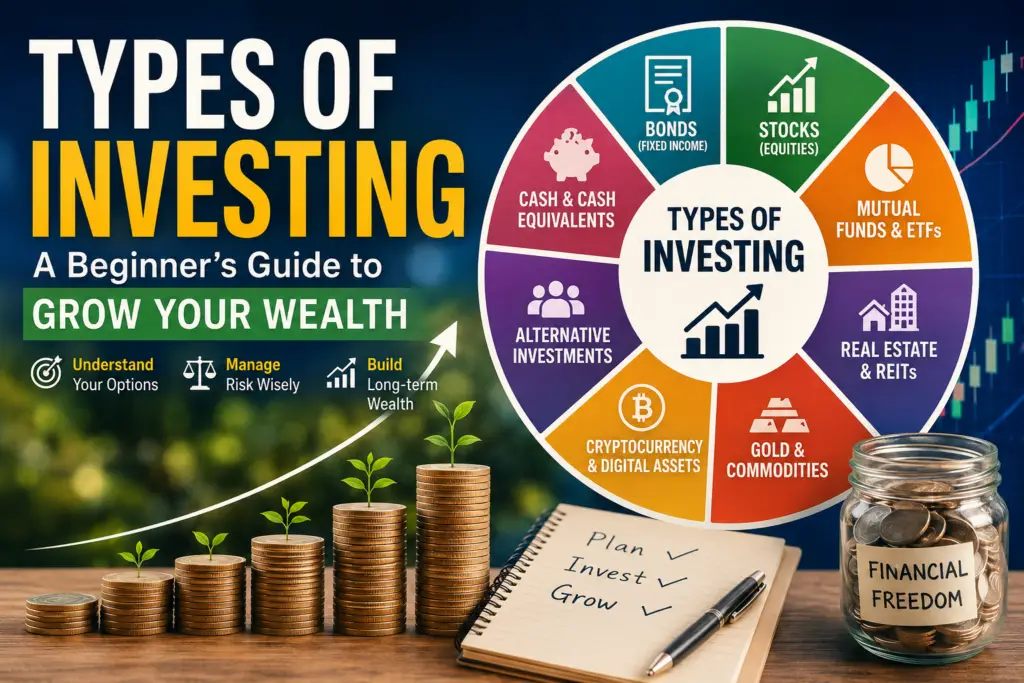
What are different types of Investing and Why Should You Care?
Many people work hard to earn money. However, earning alone may not be enough to achieve long-term financial goals. Inflation gradually reduces the purchasing power of money. Different types of investing creates different income with time period & risk involved
Therefore, investing becomes an important step toward wealth creation.
Investing means making your money grow by buying things that increase in value over time.
The main purpose is to generate returns and help achieve financial goals such as buying a house, funding children’s education, retirement planning, or creating financial freedom.
For example, if ₹1 lakh is kept in a savings account for many years, its growth may be limited. On the other hand, investing the same amount wisely could generate significantly higher returns over time.
Why Investing Is More Important Than Ever
Today’s cost of living is much higher than it was ten years ago. Education expenses, healthcare costs, and property prices continue to rise. As a result, simply saving money may not be sufficient.
Investing helps your money work for you. Moreover, it allows you to benefit from compounding, where returns generate additional returns over time.
A person who starts investing at age 25 may build much greater wealth than someone who starts at age 40, even if both invest the same monthly amount.
Investing vs Saving: Understanding the Difference
Saving and investing are often confused. However, both serve different purposes.
Saving is generally meant for short-term needs and emergencies. The risk is low, but returns are also limited.
Investing, on the other hand, is designed for long-term wealth creation. While investments may fluctuate in value, they offer the potential for higher returns.
| Factor | Saving | Investing |
| Risk | Very Low | Low to High |
| Returns | Low | Moderate to High |
| Time Horizon | Short Term | Long Term |
| Inflation Protection | Limited | Better Potential |
Therefore, a balanced financial plan includes both savings and investments
Compounding: The secret beyond your wealth creation
Albert Einstein called compound interest the eighth wonder of the world. Whether or not he actually said it, the principle remains powerful.
Suppose you invest ₹5,000 per month at 12% annual returns. Over 25 years, your invested amount may grow into a substantial corpus due to compounding.
The key lesson is simple: start early, stay invested, and remain disciplined.
Core Asset Classes: The Foundation of Investing
Understanding asset classes is the first step in learning the different types of investing.
1. Stocks (Equities)
Risk Level: High
Stocks represent ownership in a company. When you buy shares, you become a part-owner of that business.
Companies such as major Indian listed firms allow investors to participate in their growth through stock ownership.
How Can Beginners Buy Stocks?
Today, buying stocks is simple. You can open a Demat and Trading Account through a brokerage platform and purchase shares using a mobile app.
Many brokers also allow investors to start with small amounts.
Best Time Horizon
Stocks are generally suitable for goals that are at least 5 years away.
Benefits
- High growth potential
- Ownership in businesses
- Inflation-beating returns
The Ultimate Beginner’s Guide to Stock Market Investing in India
2. Bonds (Fixed Income)
Risk Level: Low to Medium
Bonds are debt instruments. When you buy a bond, you are lending money to a government or company.
In return, the issuer pays interest and eventually returns the principal amount.
Best Time Horizon
Suitable for medium-term goals ranging from 3 to 10 years.
Benefits
- Predictable income
- Lower volatility
- Portfolio stability
3. Cash and Cash Equivalents
Risk Level: Low
This category includes savings accounts, fixed deposits, recurring deposits, and short-term instruments.
These investments offer liquidity and safety. However, returns may not always beat inflation.
Best Time Horizon
Suitable for emergency funds and goals within three years.
Benefits
- Easy access to money
- High liquidity
- Lower risk
4. Real Estate
Risk Level: Medium to High
Real estate involves investing in residential, commercial, or land properties.
In addition, investors can also participate through Real Estate Investment Trusts (REITs), which provide exposure without buying physical property.
Indian Example
Many families traditionally invest in plots, apartments, or agricultural land for long-term wealth creation.
Benefits
- Potential appreciation
- Rental income
- Diversification
Open Demat A/c with Zerodha & Invest in various Products digitally
Investment Vehicles: How to Buy Assets
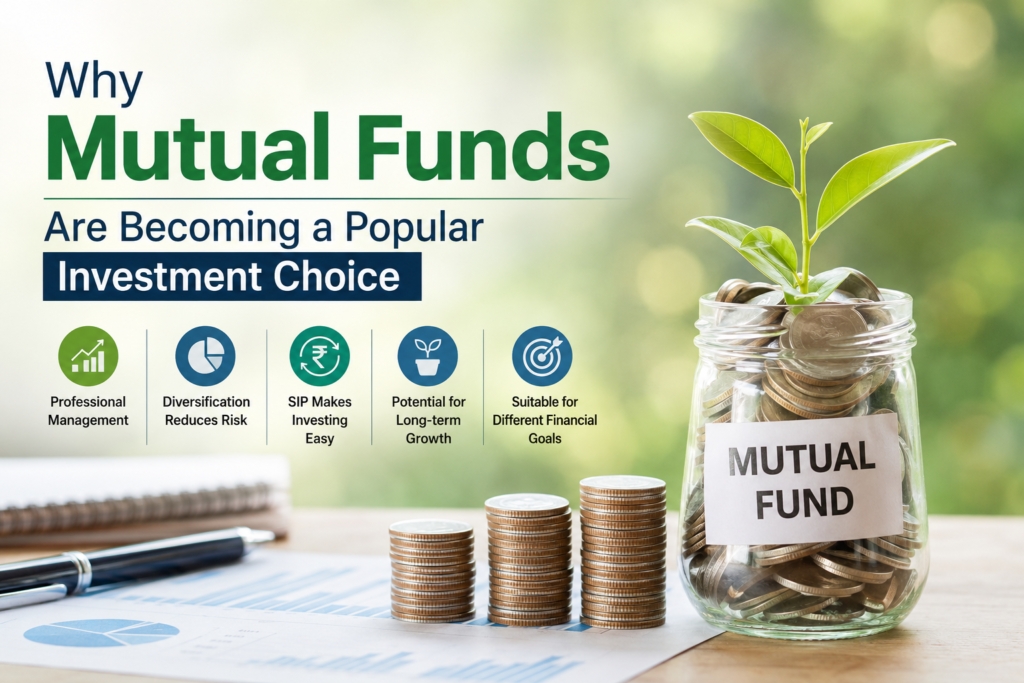
1. Mutual Funds
Risk Level: Depends on Fund Type
Mutual funds pool money from multiple investors and invest according to a specific strategy.
Professional fund managers handle investment decisions.
Why Beginners Prefer Mutual Funds
Many investors may not have time to research individual stocks. Therefore, mutual funds offer a convenient solution.
Benefits
- Professional management
- Diversification
- SIP investing option
Beginner’s Guide to Mutual Funds Investing: Best Ways to Build Wealth
2. Exchange-Traded Funds (ETFs)
Risk Level: Medium
Just like shares, ETFs also trade on stock exchanges
They generally track an index, sector, commodity, or theme.
Benefits
- Lower costs
- Easy trading
- Broad diversification
ETFs Explained: The Simple Investment Strategy Anyone Can Use
4. Retirement Accounts and Annuities
Risk Level: Varies
Indian investors commonly use options such as PPF, NPS, EPF, and pension-oriented investments.
These investments offer long-term retirement benefits and potential tax advantages.
Benefits
- Retirement planning
- Tax efficiency
- Long-term wealth creation
Alternative Types of Investing
Commodities
Risk Level: Medium to High
Commodities include gold, silver, crude oil, and agricultural products.
Gold remains one of the most popular investment options for Indian households.
Benefits
- Inflation hedge
- Portfolio diversification
Crypto currency and Digital Assets
Risk Level: Very High
Crypto currencies are digital assets that operate on block chain technology.
While they may offer high return potential, they can also experience significant volatility.
Benefits
- Innovation exposure
- Potential high returns
Important Note
Invest only a small portion of your portfolio if you understand the risks involved.
Private Equity and Venture Capital
Risk Level: High
These investments involve funding private companies and startups.
They are generally suitable for experienced investors with higher risk tolerance.
Hedge Funds
Risk Level: High
Hedge funds use advanced investment strategies to generate returns.
These products are typically designed for sophisticated investors
Strategic Investing Styles
Active vs Passive Investing
Active investing involves frequent buying and selling based on research and market opportunities.
Passive investing focuses on long-term investing through index funds and ETFs.
For most beginners, passive investing is often easier and more cost-effective.
Growth vs Value Investing
Growth investors focus on companies expected to grow rapidly.
Value investors look for quality companies trading below their perceived worth.
Both approaches can be successful when applied correctly.
Income Investing
Income investing focuses on generating regular cash flow through dividends, bonds, and interest-producing investments.
This approach is popular among retirees and conservative investors.
ESG and Impact Investing
Many investors today want their money to support responsible businesses.
Environmental, Social, and Governance (ESG) investing considers sustainability alongside financial returns
Essential Concepts Every Investor Must Know
Understanding the Risk-Reward Trade-off
Generally, higher potential returns come with higher risks.
For example, stocks may generate better long-term returns than fixed deposits.
However, stock prices can fluctuate significantly. Therefore, investors should choose investments based on goals, risk tolerance, and investment horizon.
Diversification and Asset Allocation
A common mistake is investing all money in one asset.
Instead, investors should spread investments across multiple asset classes.
This strategy helps reduce risk and improve portfolio stability.
Remember the famous principle: never put all your eggs in one basket.
Hidden Wealth Killers: Fees, Taxes, and Inflation
Many investors focus only on returns. However, costs can significantly affect wealth creation.
Common costs include:
- Expense ratios
- Brokerage charges
- Fund management fees
- Capital gains taxes
- Inflation impact
Even a small difference in annual costs can reduce wealth over long periods.
Therefore, cost transparency should always be considered before investing.
Real-Life Indian Scenario
Imagine two friends, Ravi and Arjun.
Ravi saves ₹10,000 every month in a regular savings account.
Meanwhile, Arjun invests ₹10,000 monthly through diversified mutual funds and index funds for 20 years.
Although both are disciplined, Arjun’s money benefits from market growth and compounding.
Consequently, he may accumulate substantially more wealth over time. This example highlights why understanding different types of investing is essential
Alfinz -Based Approach: Which Investment Is Right for You?
Different goals require different investments.
Emergency Fund (0–3 Years)
- Savings Account
- Fixed Deposits
- Liquid Funds
House Down Payment (3–7 Years)
- Hybrid Funds
- Bonds
- Debt Funds
Children’s Education (5–15 Years)
- Mutual Funds
- Index Funds
- Balanced Portfolios

Retirement Planning (15+ Years)
- Equity Mutual Funds
- Index Funds
- Stocks
- NPS
Choosing investments based on time horizon can significantly improve outcomes.
FAQ
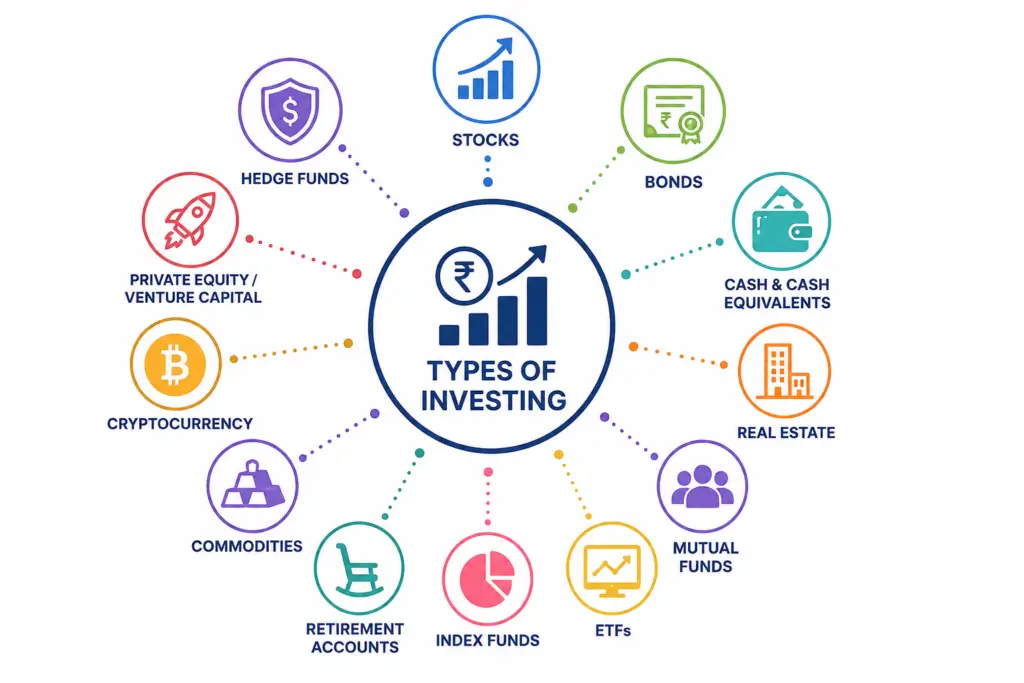
The major types of investing include stocks, bonds, cash equivalents, real estate, mutual funds, ETFs, commodities, and alternative investments
Mutual funds and index funds are often considered among the best investment options for beginners because they offer diversification and simplicity
Today, many investment platforms allow investors to start with as little as ₹100 through SIPs
Every investment carries some level of risk. However, diversification and long-term investing can help manage risk effectively.
Both are important. Savings help with emergencies, while investing helps achieve long-term financial goals.
Don’t Let Inflation Eat Your Hard-Earned Money
Every year you delay investing, compounding loses valuable time. The sooner you start, the greater the potential benefit.
Need help choosing the right investment strategy?
👉 Book a Financial Planning Consultation Today
👉 Get a Personalized Investment Roadmap
👉 Start Building Long-Term Wealth with Confidence
Conclusion:
Understanding the different Types of Investing is the first step toward making smarter financial decisions.
Whether you choose stocks, mutual funds, ETFs, bonds, real estate, or alternative investments, the key is matching your investments with your goals, risk tolerance, and time horizon.
Successful investing is not about finding the perfect investment. Instead, it is about staying disciplined, diversifying wisely, controlling costs, and allowing compounding to work over time.
The best time to start investing was years ago. The second-best time is today.
Contact Alfinz Today for Personalized Investment Guidance Before You Start Investing
Need personalized financial guidance?
Contact Alfinz today for Investments, Insurance, Loans, Taxation & Financial Planning assistance.
Disclaimer: This article is published for general educational and informational purposes only. The content shared is based on common financial planning principles and personal finance awareness. It should not be considered professional financial, investment, tax, legal, or insurance advice. Financial decisions should always be made based on individual goals, risk profile, income, and personal circumstances. Readers are advised to consult a qualified financial advisor or professional before making any financial or investment decisions. Alfinz shall not be responsible for any financial loss or decisions taken based on this content.

Shiva Kumar is the Founder of ALFINZ, a financial planning and investment advisory platform dedicated to helping individuals make informed financial decisions. He holds NISM certifications in Equity Derivatives, Currency Derivatives, Equity Research Analysis, and Mutual Fund RTA. Through ALFINZ, he shares practical insights on financial planning, stock market investing, mutual funds, insurance, taxation, and wealth creation.